Polypropylene (PP) is a low-density thermoplastic valued for chemical resistance, low cost and excellent fatigue resistance in suitable grades. It is widely used for containers, closures, clips and moulded living hinges. Gemini moulds and finishes polypropylene at its own UK facilities.
Typical properties of polypropylene for injection moulding
Property
Typical value
Melt temperature
200 to 280 °C
Mould temperature
20 to 60 °C
Tensile strength
25 to 40 MPa
Mould shrinkage
1.0 to 2.5%, high for a thermoplastic
Impact resistance
Good at room temperature. Homopolymer poor below 0 °C, copolymer better
Chemical resistance
Very good against many dilute acids, alkalis and aqueous chemicals. Check hydrocarbons, oxidising agents, solvents and elevated-temperature exposure against the specific grade
Heat performance
Grade dependent. A general-purpose homopolymer may show HDT around 95 to 100 °C at low load, but long-term service temperature must be checked against the chosen grade
Optical clarity
Translucent to opaque. Random copolymer is the clearest
Fatigue resistance
Excellent flex-fatigue resistance in unfilled grades, which is the basis of the moulded living hinge
Density
Around 0.90 to 0.91 g/cm³, the lightest common thermoplastic
PP injection moulding covers three polymer families rather than one, and the choice between them decides more than the numbers suggest. Homopolymer PP is generally selected for stiffness. Random copolymer grades can improve clarity, while impact copolymers are used where greater impact resistance, particularly at lower temperature, is required.
Chemical resistance is one of PP's main advantages, particularly against many acids, alkalis and detergents, where PMMA or PC can craze or be attacked. Compatibility still needs checking for the actual chemical, its concentration and the temperature.
Food-contact approved PP grades are widely available, which is part of why the material is used so heavily for containers and single-use items. Approval belongs to the specific resin grade and its supporting documentation. Single-use and disposable components are a large part of medical device manufacture, one of the sectors Gemini works in. Our guide to injection moulding materials compares it against the alternatives.
Why it is specified
Why choose polypropylene.
02 / Benefits
01
Chemical resistance
Very good resistance to many dilute acids, alkalis and detergents. Hydrocarbons, oxidising agents and hot service still need checking against the grade.
02
Flex-fatigue resistance
Excellent flex-fatigue resistance makes unfilled PP a standard material for moulded living hinges.
03
Low cost & weight
One of the lowest-density common moulding polymers at about 0.90 g/cm³, and generally lower cost than the engineering thermoplastics.
04
Easy to mould
Flows readily and tolerates a wide process window, and unlike the hygroscopic engineering polymers it does not normally need drying.
At 1 to 2.5%, PP shrinks more than most moulding materials, and unevenly if the wall thickness is uneven. Warping and sink marks are the common results, and tight tolerances are harder to hold than in ABS or polycarbonate.
Difficult to bond
Polypropylene has low surface energy, which makes it difficult to bond or paint with conventional systems. Surface treatment, a primer or a specialist adhesive may be required, depending on the application.
Brittle when cold
Homopolymer PP loses impact resistance near and below freezing. For cold stores, outdoor use or winter transport, an impact copolymer grade is generally specified, and it needs choosing deliberately rather than assuming.
Modest strength and UV
Not a structural material at 25 to 40 MPa, and it degrades in sunlight without stabilisers. For more heavily loaded parts, consider a stiffer engineering polymer such as PA, POM or PC, or a reinforced PP grade, depending on the working environment.
Typical Applications
What polypropylene is used for.
Moulded polypropylene suits parts made in quantity, parts that meet chemicals, and parts that need to flex. Common uses include:
04 / Applications
Containers & closures
Tubs, caps and flip-top lids, where chemical resistance and a moulded living hinge do the work.
Clips, clasps & housings
Snap fits and flexible components that rely on the material bending repeatedly without fatiguing.
Chemical & fluid handling
Parts that meet cleaning agents, detergents or aggressive contents that would attack other polymers.
On the machine
Polypropylene injection moulding considerations.
05 / Moulding
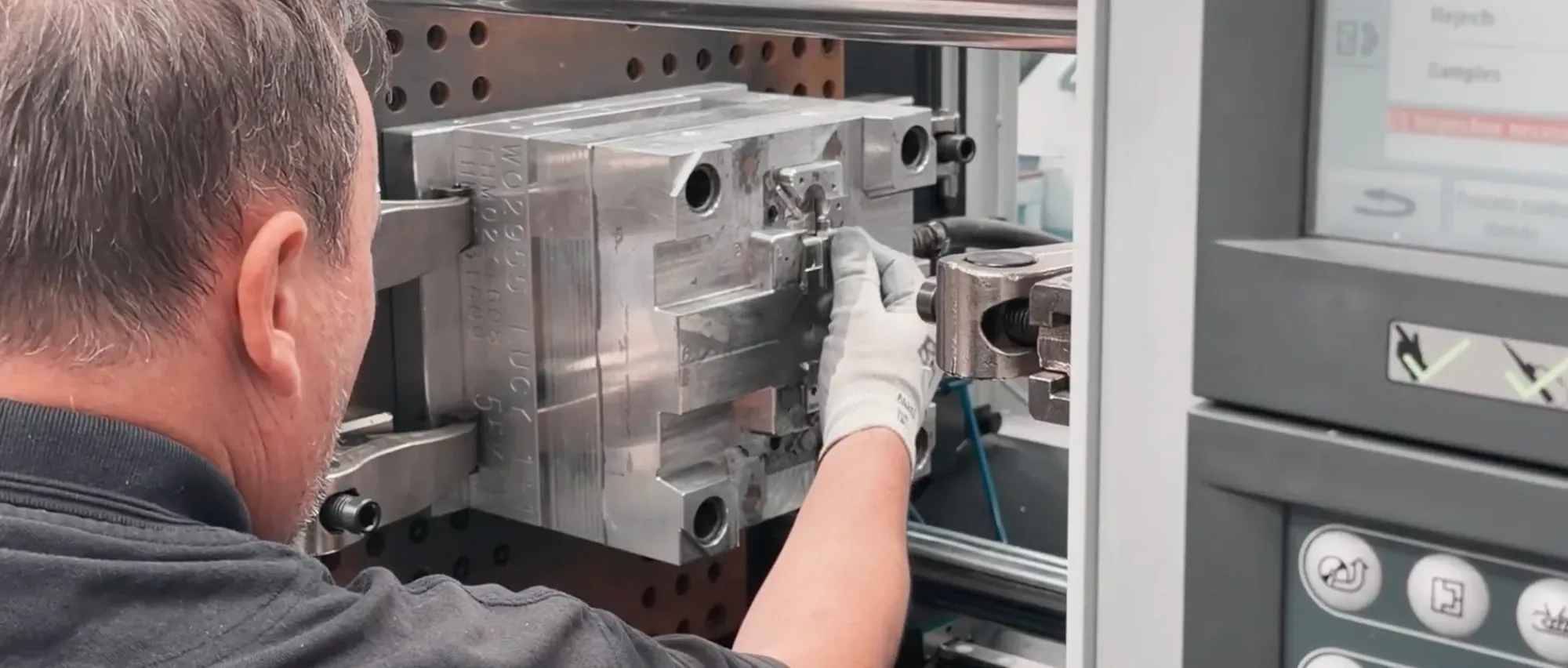
Shrinkage and the tool. Shrinkage is one of the main tooling considerations with PP. Typical mould shrinkage is higher than for ABS or PC, and varies with grade, flow direction, wall thickness and processing conditions. The tool should be designed around the actual resin shrinkage data rather than a generic PP figure, particularly where fit or flatness matters.
Wall thickness and cooling need to be controlled. Thick sections cool slowly and pull the surface in behind them, giving sink marks; uneven cooling across a part gives warp. Coring out thick areas, keeping ribs well under the wall thickness they meet, and allowing enough cooling before ejection are the practical defences.
Living hinges are designed in. Unfilled PP is commonly used because of its flex-fatigue performance. The hinge section is thin and radiused, and the gate should be positioned so a single melt front flows through the hinge approximately perpendicular to the hinge axis, avoiding a weld line in the active hinge area. Many moulders also flex the hinge shortly after ejection, while it is still warm, to condition it. Exact hinge thickness and processing should be validated for the chosen grade and the required cycle life.
Why Gemini
Why Gemini for polypropylene.
06 / Why Gemini
01
26+ years moulding
More than 26 years moulding thermoplastics for UK manufacturers, polypropylene among them.
02
Tooling under one roof
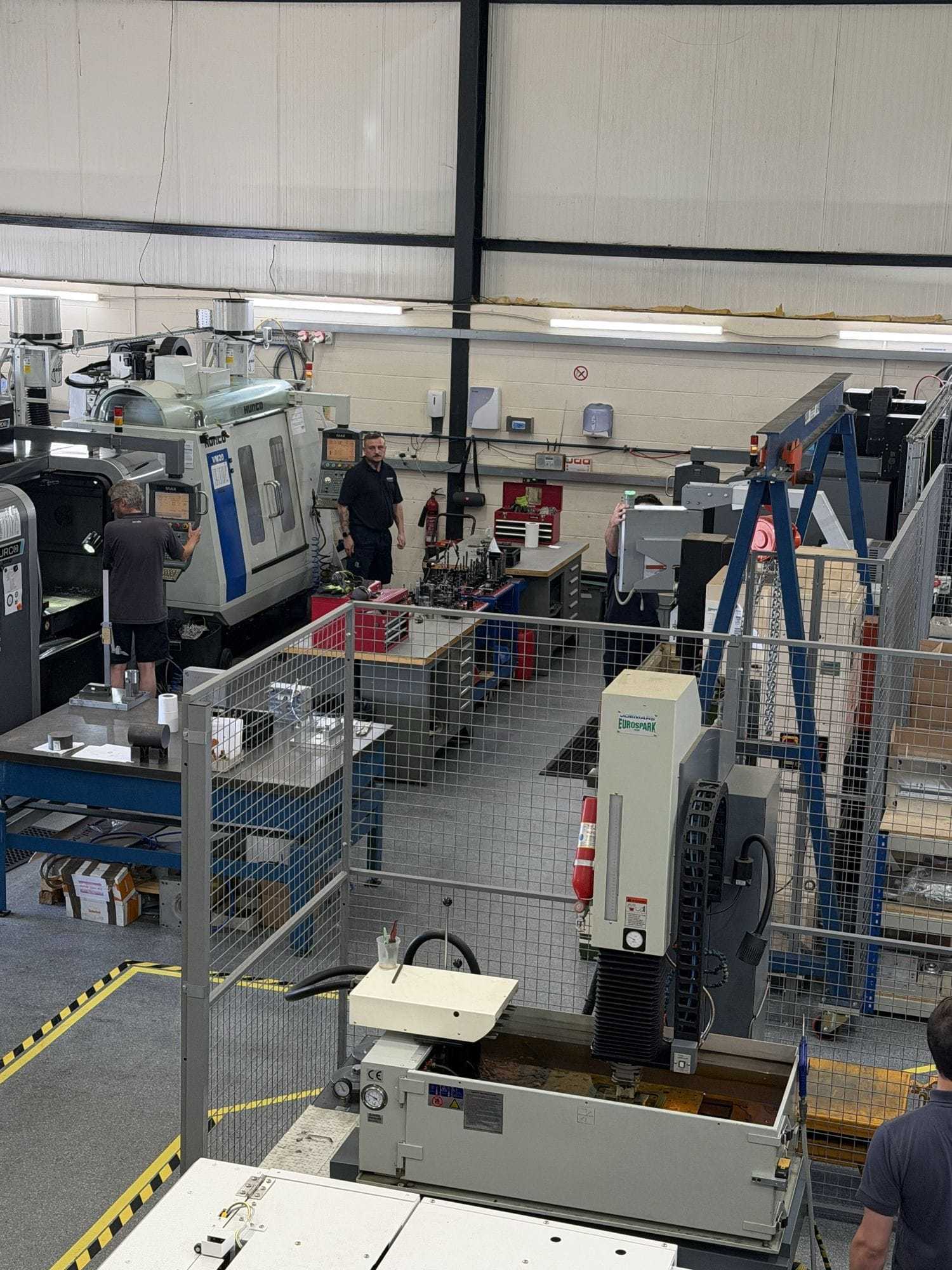
Tools cut and maintained in-house, which matters on a material whose shrinkage has to be dialled in.
03
Finished, not just moulded
Printing, assembly and finishing in-house, on a material that does not accept paint or adhesive easily.
04
Checked and accredited
An ISO 9001 quality system, with parts inspected by hand before they are dispatched.
Not easily. PP has very low surface energy, so most adhesives will not wet it and simply peel away. The practical routes are surface treatment first, by flame or corona, or a specialist polyolefin adhesive with a primer. In moulded assemblies it is usually better to design the joint out and use welding, snap fits or mechanical fasteners instead.
What is a living hinge and why is polypropylene used for it?
A living hinge is a thin section moulded into the part that flexes in place of a separate pivot, as on a flip-top cap. Unfilled PP is commonly used because of its flex-fatigue performance. A correctly designed and moulded PP living hinge can achieve very high cycle life, though performance depends on the exact grade, hinge thickness, radii, flow direction and first-flex conditioning.
Why do polypropylene parts warp?
Because shrinkage is high, at 1 to 2.5%, and uneven cooling turns that into distortion. Thick sections, ribs meeting a wall and sudden changes in wall thickness are the usual causes. Keeping the wall even, coring out thick areas and allowing enough cooling time before ejection are the standard defences, and the tool has to be cut with the real shrinkage figure for the grade.
Is polypropylene food safe?
Food-contact approved PP grades are widely available. Approval belongs to the specific resin grade and its supporting documentation rather than to polypropylene as a family, so the material must be selected and evidenced for the intended market and use.
Send Gemini a STEP file, a 2D drawing or details of the application. Tell us what the part will hold and whether it needs a living hinge, and we can review the chemical, temperature and mechanical requirements and advise whether PP or another material is the better fit.